
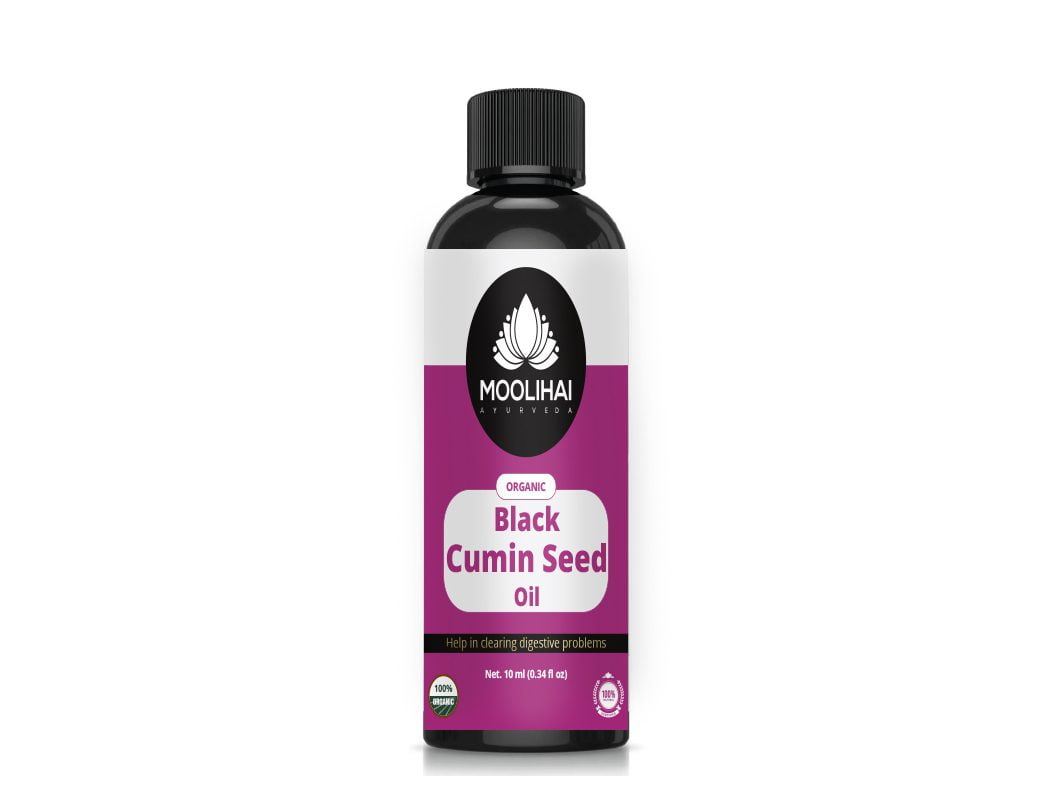
Organic Black Cumin Seed Oil / Karunjeeragam oil / Jeera – Antioxidant Support – 120 ml (4 fl oz)
19.99$
Botanical Name: Nigella sativa
Weight: 120 ml (4 fl oz)
Condition: Oil
Origin: India
Black cumin seed oil has medicinal properties that help in clearing digestive problems such as colic, gas, dysentery, diarrhea, and constipation.
Nigella Sativa · Cold-Pressed Seed Oil · 120 ml (4 fl oz)
The “Blessed Seed” Oil — 2,000 Years of Healing, Now Backed by 1,000+ Studies
No other single-ingredient oil in the world has been this thoroughly studied and this consistently revered across cultures. Black Cumin Seed Oil — cold-pressed from Nigella sativa seeds — contains thymoquinone, a bioactive compound with demonstrated antioxidant, anti-inflammatory, and immunomodulatory activity in over 1,000 published scientific studies. The ancient Egyptians called it a panacea. Greek physicians documented it in the 1st century. In Ayurveda and Unani, it’s a cornerstone digestive and immune remedy known as Karunjeeragam (கருஞ்சீரகம்). In Islamic tradition, it’s Habbat ul Barakah — the “Blessed Seed.” This is pure, cold-pressed oil from organic Nigella sativa seeds — no dilution, no carrier blending, no heat processing. Use it internally for digestive and immune support, or externally for skin and hair. One bottle, a hundred uses. $19.99.
5.0 ★ Rating (5 Reviews)
100% Cold-Pressed
Thymoquinone Rich
Ships via DHL / UPS
The Most Researched Seed Oil in History
Black Cumin Seed Oil is cold-pressed from the tiny black seeds of Nigella sativa — a flowering plant in the Ranunculaceae family, native to South Asia, Eastern Europe, and the Middle East. Despite its name, it has nothing to do with regular cumin (Cuminum cyminum) or black pepper. The seeds are small, angular, jet-black, and intensely aromatic — with a sharp, slightly peppery, almost oregano-like flavour that’s unmistakable once you’ve tasted it.
What sets this oil apart from every other “wellness oil” on the market is the sheer depth of its research base. Over 1,000 peer-reviewed studies have investigated Nigella sativa and its primary active compound, thymoquinone (TQ). The results span anti-inflammatory, antioxidant, antimicrobial, hepatoprotective (liver-protecting), immunomodulatory, and metabolic benefits. No other single seed oil has this breadth of scientific investigation. In India, it’s known as Karunjeeragam (கருஞ்சீரகம்) in Tamil and Kalonji (कलौंजी) in Hindi — a staple in both kitchen and medicine cabinet for centuries.
What’s Inside Every Drop
Thymoquinone (TQ) — The Star Compound
Thymoquinone is the most pharmacologically significant compound in Nigella sativa oil, and the reason scientists have published over 400 dedicated studies on this seed alone. TQ is a monoterpene with demonstrated antioxidant activity — it normalises glutathione levels and increases the activity of protective enzymes like superoxide dismutase, catalase, and glutathione peroxidase. It also shows potent anti-inflammatory effects by inhibiting COX-2 enzymes (similar to how ibuprofen works) and suppressing pro-inflammatory cytokines like TNF-α and IL-1β. Clinical trials in humans have shown that 5 ml/day of Nigella sativa oil for 8 weeks produced no significant adverse effects on liver, kidney, or gastrointestinal function — confirming excellent safety at standard doses.
Essential Fatty Acids — The Nutritive Base
Beyond thymoquinone, the oil is rich in essential fatty acids — particularly linoleic acid (omega-6) and oleic acid (omega-9) — that nourish skin, support cell membranes, and provide anti-inflammatory benefits of their own. The fatty acid profile makes it an excellent carrier for topical applications: it absorbs well into the skin without leaving a heavy, greasy residue. The oil also contains thymohydroquinone, thymol, carvacrol, alkaloids (nigellicine, nigelledine), saponins (alpha-hederin), flavonoids, and plant proteins — a phytochemical cocktail that explains why the oil works across so many different systems in the body.
One Oil, A Hundred Uses
Immune System Support
Black Cumin Seed Oil is one of the most well-documented natural immunomodulators available. The thymoquinone in the oil helps regulate immune responses — not just “boosting” immunity, but modulating it, which means it may help an overactive immune system calm down (as in allergies and autoimmune conditions) while strengthening a weakened one. A randomised, placebo-controlled trial on healthy volunteers found that Nigella sativa supplementation improved overall immune function markers. Traditional Unani and Ayurvedic practitioners have used it during seasonal transitions and convalescence for centuries.
Respiratory Health
For respiratory conditions, black seed oil has particularly promising research. A meta-analysis of randomised trials found that Nigella sativa supplementation improved overall asthma control scores and lung function measures (FEV1) compared to placebo. The oil’s anti-inflammatory and bronchodilatory properties make it traditionally valued for allergic rhinitis, seasonal congestion, and general respiratory wellness. In classical Tibb-e-Nabawi (Prophetic Medicine), crushed black seeds were applied to the nostrils for respiratory relief — a practice now supported by the oil’s demonstrated effect on airway inflammation.
Digestive Wellness
This is one of black cumin seed oil’s oldest and most consistent traditional uses. Ayurvedic, Unani, and Siddha practitioners have recommended it for centuries to relieve gas, bloating, colic, diarrhoea, and constipation. The oil has antimicrobial properties that may help maintain healthy gut flora, while its anti-inflammatory action soothes the digestive tract lining. In Middle Eastern and South Asian kitchens, Nigella sativa seeds are added to breads, lentils, and stews precisely for this digestive benefit — the oil is simply a more concentrated delivery of the same compounds.
Anti-Inflammatory Action
Thymoquinone inhibits COX-2 enzymes and suppresses the production of pro-inflammatory cytokines like TNF-α, IL-1β, and MCP-1. This is the same inflammatory pathway targeted by non-steroidal anti-inflammatory drugs (NSAIDs) like ibuprofen — except thymoquinone achieves it through a natural compound with far fewer side effects at standard doses. Research on rheumatoid arthritis patients found that black seed oil supplementation reduced inflammatory markers. For everyday joint stiffness, muscle soreness, or general inflammation, it may serve as a gentle, long-term supportive remedy.
Skin & Hair Health
Applied topically, black cumin seed oil offers antioxidant protection and anti-inflammatory benefits directly to the skin. A 60-day clinical trial found significant reduction in acne severity using a Nigella sativa topical preparation, with no adverse events reported. The oil has also been explored for eczema, vitiligo, and general skin barrier repair. For hair, the oil nourishes the scalp, may help reduce dandruff through its antifungal activity, and supports healthier, stronger strands. Mix it with Moolihai’s Bhringraj Oil for a powerful combined hair treatment — Bhringraj for follicle stimulation, black cumin for scalp health.
Metabolic Support
Multiple clinical trials have explored black seed oil’s effects on blood sugar, cholesterol, and blood pressure. The results are encouraging: studies on type 2 diabetes patients showed that Nigella sativa oil supplementation for 40 days demonstrated reasonable safety and may support healthier blood glucose levels. A meta-analysis also found modest but significant reductions in body weight and BMI with Nigella sativa supplementation. The mechanisms likely involve thymoquinone’s effects on insulin sensitivity and lipid metabolism. This makes it a potentially valuable adjunct for those managing metabolic syndrome — always in consultation with a physician.
Antioxidant Protection
Oxidative stress — an imbalance between free radicals and your body’s ability to neutralise them — is implicated in ageing, chronic inflammation, and cellular damage. Thymoquinone is a potent free radical scavenger that normalises glutathione levels (your body’s master antioxidant) and boosts the activity of protective enzymes including superoxide dismutase and catalase. Research has also demonstrated hepatoprotective effects — meaning it helps protect liver cells from oxidative damage caused by toxins, medications, or alcohol. For liver support, Moolihai’s Poovarasan Pattai powder is an excellent traditional complement.
Antimicrobial Properties
Nigella sativa oil has exhibited broad-spectrum antimicrobial activity in laboratory studies — effective against various bacteria, fungi, and even some parasites. The combination of thymoquinone, thymol, and carvacrol creates a multi-compound antimicrobial effect that’s harder for microorganisms to resist compared to single-agent approaches. Traditionally, this is why black cumin oil has been used for skin infections, wound healing, oral health, and gut flora balance. It’s not a replacement for antibiotics in serious infections, but it may support the body’s natural antimicrobial defences as part of a holistic health routine.
Versatile by Nature — Inside & Out
Daily Oral Supplement (Internal)
Take 1 teaspoon (approximately 5 ml) of black cumin seed oil daily, either on its own or mixed with a tablespoon of raw honey. Moolihai’s Marthandam Honey or Garlic Infused Honey pairs exceptionally well — the honey masks the oil’s distinctive sharp, peppery flavour while adding its own antimicrobial benefits. Take it in the morning on an empty stomach for best absorption. If the taste is too strong neat, try mixing it into warm (not hot) water with honey and a squeeze of lemon. Clinical studies have used 5 ml/day for 8 weeks with no significant adverse effects, making this a well-established safe dose for adults.
Culinary Use (Internal)
Black cumin seed oil adds a distinctive, slightly bitter, aromatic depth to food — think of it as a finishing oil rather than a cooking oil (high heat destroys the thymoquinone). Drizzle it over hummus, lentil soups, roasted vegetables, or warm flatbreads. It’s particularly delicious in Middle Eastern and South Asian dishes where it complements cumin, coriander, and turmeric. Add a teaspoon to salad dressings or stir it into yoghurt with a pinch of salt for a probiotic-rich digestive condiment. Pair it with Moolihai’s Sukku Karupatti (dry ginger palm jaggery) dissolved in warm water for a traditional digestive remedy.
Skin & Face (Topical)
Apply 3–5 drops directly to the face as a night serum, focusing on areas of concern — acne spots, dry patches, or areas of hyperpigmentation. The oil absorbs relatively quickly and won’t clog pores for most skin types (always patch test first on the inner wrist). For a deep-nourishing face mask, mix a few drops with Moolihai’s Multani Mitti (fuller’s earth) and a teaspoon of honey — apply for 15–20 minutes, then rinse. For eczema-prone or irritated skin, apply a thin layer to the affected area twice daily. The anti-inflammatory and antioxidant properties work topically just as effectively as internally.
Hair & Scalp Treatment (Topical)
Warm a tablespoon of black cumin seed oil between your palms and massage it into the scalp in circular motions, working it through to the ends. Leave it on for at least 30 minutes (overnight is ideal — wrap your hair in a silk scarf or use a towel on your pillow). The antifungal properties help address dandruff and scalp irritation, while the essential fatty acids deeply nourish dry, brittle hair. For a supercharged hair treatment, blend equal parts Black Cumin Seed Oil and Moolihai’s Bhringraj Oil — the Bhringraj targets hair growth and greying prevention while the black cumin addresses scalp health and inflammation. Wash out with a gentle shampoo.
One Seed, A Thousand Names
Very few herbs enjoy the cross-cultural reverence that Nigella sativa commands. It has been independently valued by Ayurvedic, Siddha, Unani, Greek, and Prophetic medical traditions — each arriving at the same conclusion about this seed’s extraordinary versatility.
Tamil
Karunjeeragam · கருஞ்சீரகம்
Hindi
Kalonji · कलौंजी · Mangrail
Arabic
Habbat ul Barakah · حبة البركة · Habbat us Sauda
Turkish
Çörek Otu
German
Schwarzkümmel
Persian
Siyah Daneh · سیاهدانه
Malayalam
Karim Jeerakam · കരിംജീരകം
English
Black Cumin · Kalonji · Black Caraway · Nigella
What Our Customers Say
It’s really good; I’ve seen great results with continuous use
Good product 👌 Using this oil along with my homemade hair oil
Good product, worth the money
At a Glance
Volume
120 ml (4 fl oz)
Form
Cold-pressed oil, unrefined
Origin
India
Rating
5.0 out of 5 (5 verified reviews)
Certification
Organic · FSSAI Certified
Active Compound
Thymoquinone (TQ) — primary bioactive
Free From
No dilution, no carrier blending, no heat processing
Price
$19.99
Direct From India to Your Door
United States
5–7 business days via DHL/UPS Express
United Kingdom
5–7 business days via DHL/UPS Express
Canada
5–7 business days via DHL/UPS Express
Common Questions
Moolihai sells both whole Black Cumin Seeds (Nigella sativa) and this cold-pressed oil — and they serve complementary but different purposes. The whole seeds are ideal for culinary use: tempering in lentils, kneading into bread dough, sprinkling over salads, or chewing a few seeds daily as a digestive aid. The seeds provide fibre, protein, and the full nutritional profile (16g protein, 50g carbohydrates per 100g) in addition to the bioactive compounds. The oil, by contrast, is a concentrated extraction of the seed’s fat-soluble active compounds — particularly thymoquinone. It delivers a higher dose of the therapeutic constituents per serving than eating whole seeds, and it can be used topically on skin and hair, which seeds cannot. Think of it this way: seeds for kitchen and daily nutrition, oil for targeted therapeutic and topical use. Ideally, keep both — cook with the seeds daily and take the oil as a supplement. They work together beautifully.
For oral use, the standard dose used in most clinical studies is 1 teaspoon (approximately 5 ml) per day. An 8-week clinical trial on healthy volunteers at this dose found no notable adverse effects on liver, kidney, or gastrointestinal function. Another study on type 2 diabetes patients using a similar dose for 40 days showed reasonable safety on both kidney and liver markers. Most traditional practitioners recommend taking it for 8–12 weeks, then reassessing. While many people take black seed oil continuously for months, it’s wise to consult your healthcare provider for extended use beyond 12 weeks, especially if you’re on medication. Start with half a teaspoon for the first few days to gauge your body’s response — some people experience mild digestive warmth initially, which typically subsides. The oil is most potent taken on an empty stomach in the morning.
Thymoquinone — the primary active compound — is sensitive to high heat. If you cook with this oil at high temperatures (frying, sautéing), you’ll lose a significant portion of its therapeutic value. That’s why we recommend using it as a finishing oil: drizzle it over cooked dishes, stir it into warm (not boiling) soups, add it to salad dressings, or mix it into hummus and dips after they’re prepared. It has a distinctive, sharp, slightly bitter flavour that adds beautiful depth to Middle Eastern and South Asian cuisine. For actual cooking at high heat, use a heat-stable oil like Moolihai’s Organic Cow Ghee, and then add the black cumin seed oil at the table for flavour and health benefits.
Yes — while black cumin seed oil is generally safe at recommended doses, there are important interactions to consider. Research has shown that thymoquinone may inhibit certain cytochrome P450 enzymes, which are responsible for metabolising many prescription drugs. If you’re taking blood-thinning medications (warfarin, aspirin), blood pressure medications, diabetes medications (metformin, insulin), or immunosuppressants, consult your doctor before adding black cumin seed oil to your routine, as it may amplify or interfere with these drugs’ effects. Pregnant and breastfeeding women should avoid supplemental doses (culinary amounts are generally considered safe) due to insufficient clinical safety data. People scheduled for surgery should discontinue use at least 2 weeks beforehand due to potential effects on blood clotting and blood pressure.
Cold-pressing means the oil is extracted by mechanically pressing the seeds at low temperatures — without the use of chemical solvents (like hexane) or high heat. This matters enormously for Nigella sativa oil because thymoquinone is heat-sensitive and degrades at high temperatures. Commercially cheap black seed oils are often extracted using solvent methods or high-temperature pressing, which yields more oil per batch but destroys a significant portion of the thymoquinone and other volatile bioactive compounds. Research has found that thymoquinone content varies over 250-fold across commercial products — from as low as 3 mg to over 800 mg per 100g of oil. Cold-pressing preserves the full spectrum of active compounds, which is why Moolihai’s oil has that strong, characteristically pungent taste — that intensity is the thymoquinone. If your black seed oil tastes mild and bland, it’s likely been heat-processed or diluted.
Yes, for most skin types, daily facial use is safe and beneficial. Start by patch testing on your inner wrist for 24 hours. If no irritation occurs, apply 2–3 drops to clean skin at night as a serum — it absorbs well and won’t clog pores for most people. A 60-day clinical trial using a Nigella sativa topical preparation found a 78% reduction in acne severity with no adverse events. For dry skin, the essential fatty acids provide deep hydration. For oily or acne-prone skin, the anti-inflammatory and antimicrobial properties help control breakouts without stripping the skin. If you have very sensitive or reactive skin, dilute it with a carrier oil like Moolihai’s Moringa Oil (a lighter, gentle carrier) at a 1:1 ratio for the first week. For a complete topical skincare ritual, try combining it with Moolihai’s Thanaka Powder (a traditional skin-brightening agent) in a face mask once or twice a week.
Disclaimer: These statements have not been evaluated by the Food and Drug Administration (FDA) or any other regulatory body. This product is not intended to diagnose, treat, cure, or prevent any disease. The information provided draws on traditional Ayurvedic, Siddha, Unani, and Prophetic medical practices, as well as published scientific research, and is for educational purposes only. Individual results may vary. Consult a qualified healthcare professional before use if you are pregnant, nursing, taking medication (especially blood thinners, diabetes drugs, or blood pressure medications), or managing a medical condition. Do not use as a substitute for professional medical advice or treatment.
| Weight | 0.12 kg |
|---|
5 reviews for Organic Black Cumin Seed Oil / Karunjeeragam oil / Jeera – Antioxidant Support – 120 ml (4 fl oz)
Add a review
You must be logged in to post a review.
Related products


Ariya (verified owner) –
Good product 👌 Using this oil along with my homemade hair oil
Virginia (verified owner) –
Good product, worth the money
Amber (verified owner) –
It’s really good; I’ve seen great results with continuous use
Charleigh (verified owner) –
Great value for money
Miranda (verified owner) –
Good quality product